What Is a Provisional Patent? A Beginner's Guide to Protecting Your Idea
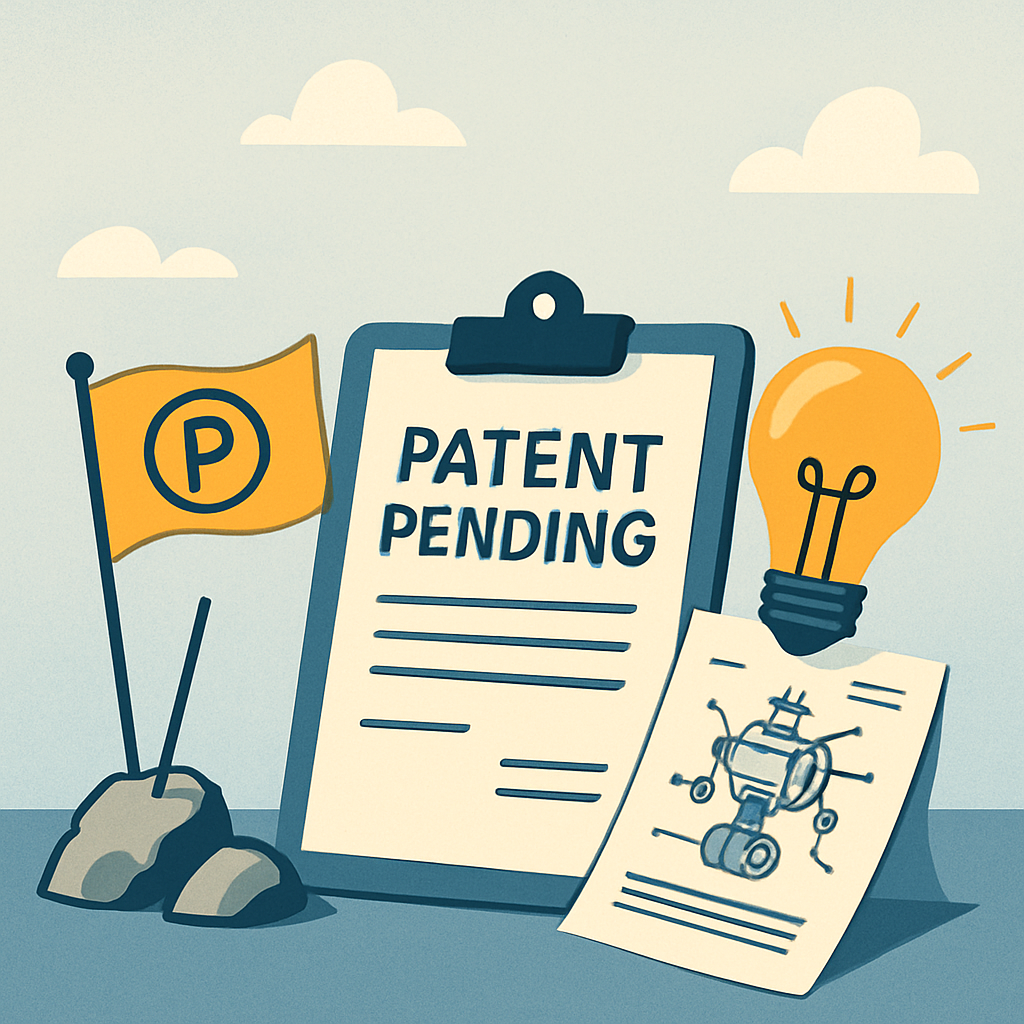
If you've had a great idea and you're worried someone else might file first, a Provisional Patent Application (PPA) is often the smartest first move.
Think of a provisional as planting your flag: you lock in an early filing date and "Patent Pending" status, then get up to 12 months to build, test, and raise money before committing to a full (non-provisional) utility patent.
- Low-cost protection (as little as ~$65): If you qualify as a micro entity, USPTO filing fees for a provisional can be around $65.
- 12-month window: You get one year to refine your invention, validate the market, and seek funding while keeping your filing date.
- Simpler requirements: No formal claims are required. You mainly need a detailed description and drawings.
- Locks in your priority date: Filing first establishes your place in line at the patent office against later filers.
What Is a Provisional Patent?
A provisional patent application is a temporary, one-year filing with the U.S. Patent and Trademark Office (USPTO) that:
- Establishes an early filing date for your invention.
- Is not examined by the USPTO.
- Will never become a patent on its own.
To get an issued patent, you must file a non-provisional (utility) application that claims priority to your provisional within 12 months.
For many individual inventors and small businesses, the big appeal is:
- Lower cost (especially with micro-entity status).
- Less formality than a full utility patent.
- A way to move quickly while you're still validating and building.
The Power of "Patent Pending" Status
Once you file a valid provisional, you can usually label your invention as "Patent Pending." That status:
- Signals to competitors that you've filed first.
- Shows investors and partners you're serious about IP.
- Gives you more confidence when talking to manufacturers, licensees, or early customers.
- Helps you look more credible when presenting your product publicly.
"Patent Pending" itself does not give you enforceable rights until you follow up with a granted patent, but it is a strong business signal and part of a solid IP strategy.
Provisional vs. Non-Provisional (Utility) Patent
Here's a quick comparison:
| Feature | Provisional Patent (PPA) | Non-Provisional (Utility) Patent |
|---|---|---|
| Purpose | Secure early filing date; 12-month placeholder | Examined for a full 20-year patent grant |
| Cost (Micro Entity) | ~$65 filing fee | ~$400+ filing fees, plus potential attorney costs |
| Duration | 12 months (no extensions) | Up to 20 years from non-provisional filing date |
| Complexity | Detailed description + drawings | Formal claims, strict formats, declarations |
| Status Granted | "Patent Pending" | Granted patent (if approved) |
| USPTO Examination | Not examined | Fully examined |
A common strategy: file a provisional now, then decide within 12 months whether to invest in a full utility application.
How to Use Your 12-Month Window Strategically
That one-year period after filing your provisional is valuable. Use it to:
- Validate the market. Talk to customers, get feedback, test demand, and see if the idea is worth further investment.
- Develop your product. Build prototypes, refine the design, and solve technical issues.
- Seek funding or partners. Approach investors, manufacturers, or licensees with more confidence because you have a filing date.
- Plan your next patent move. Decide whether, when, and where to file a non-provisional (and possibly international applications) before the 12 months are up.
Common Misconceptions About Provisional Patents
Myth: A provisional patent gives you the same rights as a full patent.
Reality: A provisional is just a placeholder filing and priority date. You do not get enforceable rights until a non-provisional is filed and granted.
Myth: You can extend a provisional beyond 12 months.
Reality: You cannot extend a provisional. If you do not file a non-provisional (or new filings in certain limited strategies) within 12 months, you lose that priority date.
Myth: A short, vague description is enough.
Reality: Your provisional must be detailed enough that someone skilled in the field could make and use your invention. Thin descriptions can fail to protect what you think they do.
Ready to Protect Your Idea?
For many inventors and entrepreneurs, a provisional patent is the best first step:
- Low cost.
- Fast to file.
- "Patent Pending" status.
- A full year to see if your idea is worth a bigger patent investment.
You do not have to be a lawyer or spend thousands to get started. With clear guidance and the right tools, you can go from idea to filed provisional quickly and affordably.
AutoInvent is built to make that even easier: it turns your idea into patent-style documents, then walks you through actually filing your provisional patent yourself. You can go from idea to a filed provisional in under 10 minutes for under $100 (plus the USPTO fee), keeping you in control while dramatically simplifying the process.